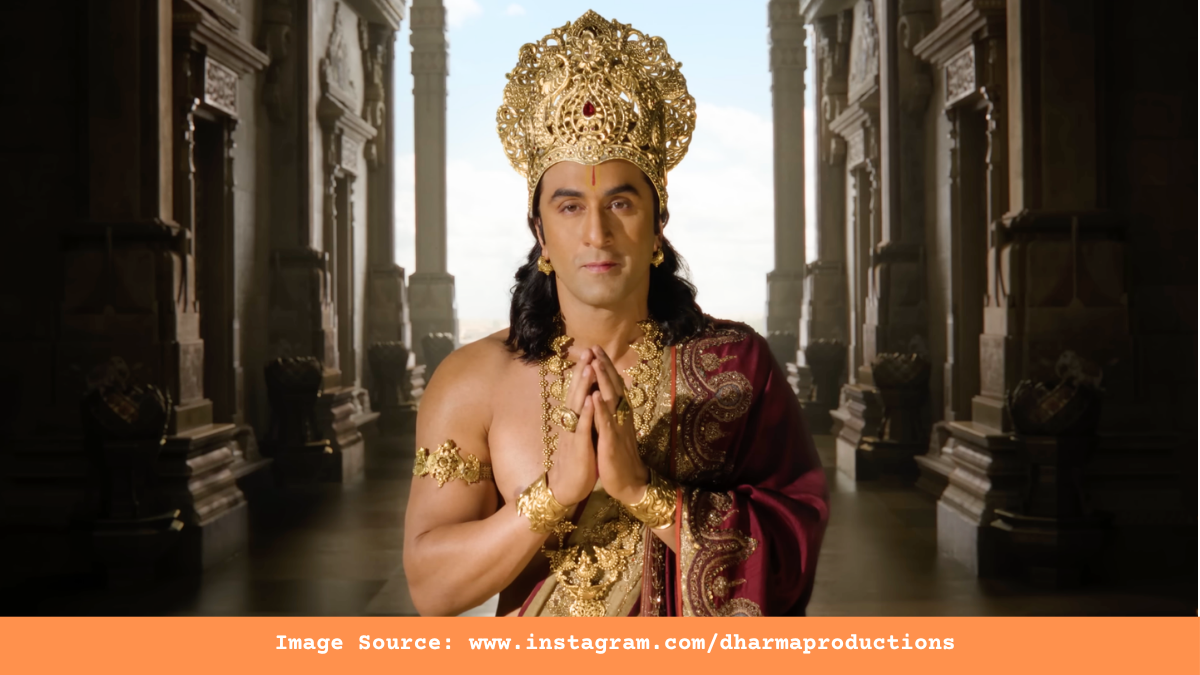
Somewhere in a VFX lab, an engineer is currently being worshipped like a minor deity, because the Ramayana English Trailer did something no Bollywood-to-Hollywood crossover has managed before: it made the internet argue about whether Ranbir Kapoor’s lips are lying to them.
Not “is the movie good,” not “is the CGI elephant too big” (it is, gloriously so) — but “wait, is that actually his mouth saying those words, or has science gone too far?”
Grab your popcorn, your incense, and possibly a stiff drink, because we’re breaking down everything verified, everything rumored, and everything a bunch of very confused Twitter — sorry, X — users have decided is either witchcraft or the future of cinema.
Wait, Why Is Everyone Suddenly Obsessed With a Trailer’s Mouth Movements?
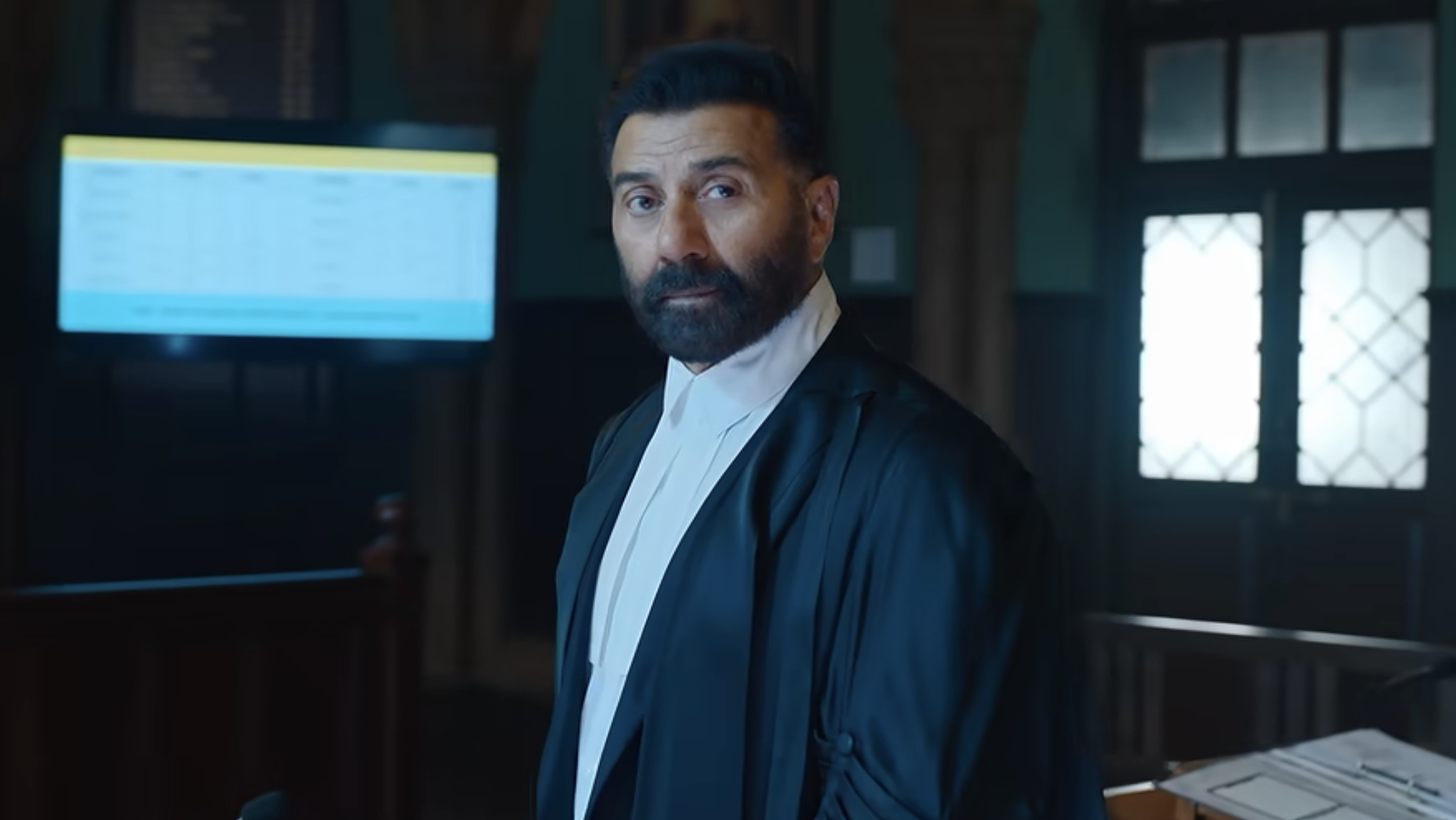
Let’s set the scene. Nitesh Tiwari — the man behind Dangal, India’s highest-grossing film of all time — is directing a two-part, IMAX-shot mythological epic starring Ranbir Kapoor as Lord Rama, Sai Pallavi as Sita, and Yash (of KGF fame, still recovering from carrying that entire franchise on his cheekbones) as Ravana. The film also features Sunny Deol as Hanuman, Ravi Dubey as Lakshman, and a supporting cast so stacked it reads like the guest list of Bollywood’s most exclusive wedding.
Part 1 releases November 6, 2026, just ahead of Diwali, with Part 2 following at Diwali 2027, and — as Gulf News confirms — the project is scored by the genuinely unhinged pairing of Hans Zimmer and A.R. Rahman, because apparently one Oscar-winning composer wasn’t quite epic enough for a war involving a ten-headed demon king.
But the Hindi trailer, released the week before, was just the appetizer. The main course — the one everyone’s actually chewing on — is the Ramayana English Trailer, and it arrived with a party trick nobody saw coming.
Enter Brahma AI: The Tech That Made Ranbir Kapoor Fluent in English Without Ever Saying a Word of It (Probably)
Here’s the headline everyone’s been repeating like a mantra: the Ramayana English Trailer doesn’t use a dubbing artist doing a “very serious deep voice” over footage that clearly shows someone’s mouth forming completely different Hindi syllables.
Instead, according to Pragativadi, the makers unveiled Brahma AI, an AI-powered lip-synchronization system developed by visual effects powerhouse DNEG — the Oscar-hoarding studio behind the VFX on Dune and Tenet — that digitally reshapes the actors’ facial and lip movements so they visually match the English dialogue track, instead of the other way around.
Translation: rather than forcing the audio to awkwardly fit the footage (the classic “dubbed anime” problem that has haunted foreign-language releases since the dawn of cinema), Brahma AI does the opposite. It takes the actors’ own voices — reportedly re-recorded in English by Ranbir Kapoor, Yash, and Sai Pallavi themselves, per Eastern Eye — and then digitally sculpts the on-screen lip movements to sync perfectly with that new dialogue.
So instead of your eyes and ears disagreeing like an old married couple, everything lines up. No more Hanuman appearing to silently scream “AAAAAAA” while a very calm British voiceover explains devotion and duty.
This isn’t some fly-by-night startup operation, either. Brahma is a DNEG-born AI and content-tech company that, per a Business Wire release, recently acquired Metaphysic — the generative-AI outfit responsible for some of Hollywood’s most convincing “de-aging” and digital-double work — in a deal that valued Brahma at a cool $1.43 billion.
So when people call the tech behind the Ramayana English Trailer “cutting-edge,” they’re not exaggerating for SEO purposes (unlike, arguably, this very sentence).
So How Did the Ramayana English Trailer Actually Achieve the Lip Sync? A (Mostly) Verified Breakdown
Piecing together the verified reporting, here’s the process as best we can reconstruct it:
- Original performance, original language. The actors performed their scenes in Hindi on set, exactly as directed by Nitesh Tiwari, with full emotional commitment to yelling at demons in the ancestral tongue.
- English re-recording by the same actors. Rather than hiring Western voice actors, the production reportedly had Ranbir Kapoor, Yash, and Sai Pallavi re-record their lines in English themselves — preserving their actual voices, accents, and vocal identity, as multiple outlets including India.com and Gulf News have noted.
- AI-driven facial remapping. Brahma AI then goes to work on the footage itself, digitally adjusting jaw, lip, and facial muscle movement frame-by-frame to match the new English audio — not slapping on a crude “mouth flap” overlay, but reportedly preserving the original performance’s micro-expressions.
- Manual VFX polish. Given DNEG’s involvement (the same studio responsible for VFX Oscars on films like Dune: Part One), it’s a safe bet this isn’t a fully “push a button and walk away” AI pipeline — there’s almost certainly a human VFX artist layer smoothing out anything the model gets wrong, though the studios haven’t published a full technical breakdown, so consider this the “informed rumor” part of the rundown.
What’s confirmed and what’s rumor, to be crystal clear: the existence and branding of Brahma AI, its DNEG origin, and the “actors re-recorded English dialogue themselves” claim are reported across multiple outlets. The exact granular pipeline — how much is pure AI inference versus traditional VFX rotoscoping cleanup — is not something any studio has laid out in a white paper, so treat that part as educated industry speculation dressed up in a lab coat.
The Internet’s Verdict on the Ramayana English Trailer: Equal Parts Awe and Mild Suspicion
Reactions to the Ramayana English Trailer have been, in the grand tradition of the internet, wildly split between “this is sorcery, I love it” and “this is sorcery, arrest it immediately.”
On the glowing end: IndiaForums reports that even amid unrelated controversy swirling around the film, the trailer’s AI-powered lip-sync and dubbing drew an “overwhelmingly positive” response, with some viewers straight-up declaring the English cut better than the Hindi original — a genuinely spicy take to drop into any Bollywood comment section.
Fans particularly lost it over Airavata, Indra’s mythical flying white elephant, going full aerial-combat mode against Ravana, with several Western viewers admitting they had no idea Indian mythology could out-epic their beloved Greek and Norse sagas.
On the skeptical end: Gulf News notes that the combination of flawless lip-sync and unusually clean audio actually backfired a little — some viewers got suspicious the voices themselves were AI-generated rather than genuinely performed, sparking a mini-backlash over “synthetic” line readings.
Others felt the dialogue delivery read as slightly formal or stiff, per Pragativadi’s roundup, the cinematic equivalent of a text message that’s too perfectly punctuated to be human.
And because no discussion of any dub is complete without someone demanding a completely different approach, a contingent of native English speakers argued the trailer would’ve hit harder with Western voice actors instead of the original cast’s English readings — missing, perhaps, the entire point of Brahma AI, which was built specifically to avoid replacing the actors’ real voices and performances in the first place.
Why the Ramayana English Trailer Actually Matters (Besides the Memes)
Strip away the “is this witchcraft” discourse, and the Ramayana English Trailer represents something genuinely notable: an Indian studio essentially declaring war on the entire concept of the janky international dub. For decades, foreign-language films hitting global markets have leaned on either subtitles (great for purists, rough for mass-market appeal) or dubbing (functional, but the visual mismatch between mouth and audio has been mocked in everything from kung-fu movies to anime conventions since forever).
If Brahma AI genuinely delivers what the Ramayana English Trailer promises, it’s a legitimate swing at solving that decades-old problem — and given that producer Namit Malhotra also just locked in Sony as the film’s worldwide distributor according to Gulf News, the ambitions here go well past “nice trailer, bro” and into “let’s actually take an Indian mythological epic to a genuinely global box office.”
Whether Brahma AI becomes the industry standard or just a very expensive flex remains to be seen. But for now, the Ramayana English Trailer has accomplished the near-impossible: getting people who’ve never read the Ramayana, never watched a Bollywood film, and couldn’t pick Ranbir Kapoor out of a lineup to spend their Thursday afternoon passionately debating VFX pipelines. Lord Rama spent fourteen years in exile to prove a point. This trailer needed about ninety seconds.
Quick Recap for the Skimmers
- What it is: The official international Ramayana English Trailer for Nitesh Tiwari’s two-part mythological epic, releasing November 6, 2026.
- The headline tech: Brahma AI, an AI lip-sync system from DNEG, reportedly built to match actors’ real English-language re-recordings to their on-screen mouth movements — no dubbing-artist voice swap involved.
- Confirmed: DNEG/Brahma AI’s involvement, the actors recording their own English dialogue, the November 6, 2026 release date, and Sony’s worldwide distribution deal.
- Rumor/speculation: The exact technical split between pure AI modeling and manual VFX cleanup — nobody’s published the blueprint yet.
- Internet consensus: Mostly “wow,” occasionally “wait, is that voice even real,” and universally “that elephant needs its own spinoff.”
So the next time someone tells you dubbing is a lost art, just point them to the Ramayana English Trailer and watch their entire worldview quietly, seamlessly, and suspiciously perfectly resync.
Keep coming back to ScreenTrak for the latest in the world of entertainment!