
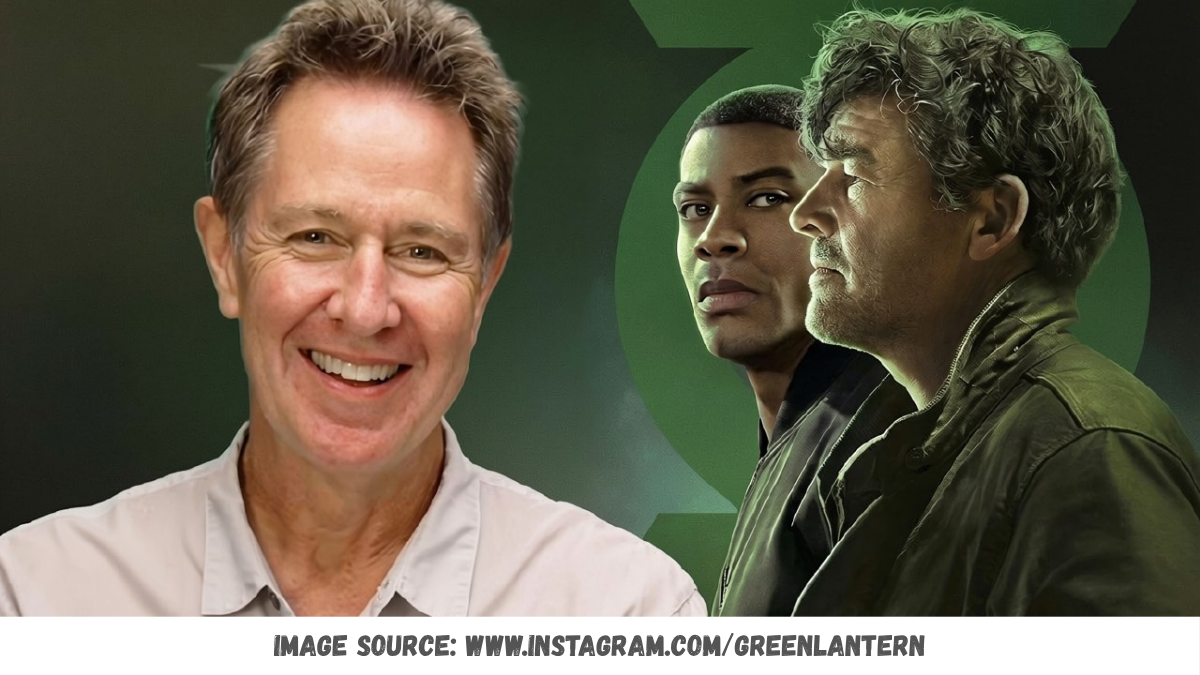
Let’s start with the source material, because a proper Lanterns Episode 6 Analysis has to begin where the receipts are: showrunner Chris Mundy’s sit-down with Collider, published under the headline “‘Lanterns’ Creator Officially Reveals His Long-Term Plan for HBO’s Gritty Sci-Fi Detective Series.”
Mundy — the Ozark and True Detective: Night Country alum who somehow ended up running a show about space cops with laser rings — spent the interview doing what all good showrunners do after a big episode: explaining himself, gently, before the internet could do it for him.
The headline reveal, and the one worth anchoring any Lanterns Episode 6 Analysis around, is tonal. Mundy admitted the show is threading an intentionally weird needle between “the grit of True Detective” and “the more fantastical Green Lantern story components,” which is Hollywood-speak for “we know it’s strange that a grieving Nebraska sheriff and a corporate-sponsored space cop with a gold tooth are in the same scene, and we’re doing it on purpose.”
He called it “a tricky balance,” which might be the most honest sentence a DC showrunner has said all year.
The Guy Gardner of It All
No Lanterns Episode 6 Analysis is complete without addressing the bowl cut in the room: Nathan Fillion’s Guy Gardner, who arrived in “Bad Optics” like a Bat-signal knockoff with anger issues.
Mundy told Collider the writers knew “pretty much right away” they wanted Gardner in both timelines, partly to anchor the audience in when the story was happening, and partly because — his words, more or less — the character can be played for as much or as little comedy as you want. James Gunn leaned into the comedy in Superman; Mundy and company leaned into something closer to menace with a haircut.
That tracks with what other outlets picked up from the same press run. The Playlist reported Mundy describing Gardner as “fabulously obnoxious” and confirmed he’ll pop up “a few different times” rather than becoming a series regular — which, if you watched Episode 6, checks out.
Guy shows up, refuses to investigate a murder because of, well, bad optics, gets corrected from “gym teacher” to “athletic director” by John Stewart in what might be the pettiest line reading of the year, and then leaves. That’s not a character arc. That’s a cameo with a grudge.
Why John’s Spotlight Episode Almost Moved
Here’s a genuinely spicy nugget buried in the Collider piece that most recaps skipped: Mundy revealed that John Stewart’s spotlight episode almost aired later in the season than it did. Any thorough Lanterns Episode 6 Analysis owes it to the timeline nerds to flag this, because “Bad Optics” is functionally John’s episode — his return to Rushville, his decade-old wounds, his non-reunion with a resurrected-from-prison Hal Jordan.
Knowing the show once considered delaying that reveal recontextualizes the whole hour as a structural gamble that paid off, mostly because Aaron Pierre can apparently do “quietly furious ex-Marine architect” in his sleep.
The Season 2 Question (Yes, Again)
Every Lanterns Episode 6 Analysis this week eventually has to answer the same question fans keep typing into search bars: is there more coming? Mundy didn’t get a formal renewal announcement out of Collider, but he laid out his “long-term plan” in broad strokes — and separately, The Hollywood Reporter confirmed Mundy is already breaking story for a potential Season 2 alongside Halt and Catch Fire co-creator Christopher Cantwell, since original co-creators Damon Lindelof and Tom King are off running The Chain and Mister Miracle, respectively.
Mundy’s quote there is the kind of cautious optimism showrunners give when they don’t want to jinx it: “You have to go forward with total confidence as if it’s going to happen.” Translation: nothing is signed, but nobody’s clearing out their desk either.
Cosmic Book News offered the necessary cold shower, pointing out that a writers’ room isn’t a greenlight and that Lindelof’s own “if it’s successful” framing got conveniently clipped out of a lot of victory-lap headlines. Fair. But a show that’s cheap by HBO standards, per that same piece, doesn’t need Game of Thrones numbers to get picked up — it needs decent ones. Which brings us to how Episode 6 actually landed.
Also Read: Bad Optics: The Complete Lanterns Episode 6 Breakdown
Bad Optics, Good Reviews: The Critical Roundup
A Lanterns Episode 6 Analysis without the actual critical temperature check would be malpractice, so here’s the scoreboard. IGN landed at a lukewarm 6/10, arguing the show “takes a fairly substantial hit” as it juggles its expanding mythology. Collider’s own recap-and-review, written by Michael John Petty, gave it a 7/10 and posed the fair question hanging over the whole season: will Lanterns stick the landing?
Other outlets were kinder to the hour. The New York Times called it “New Guy” in its recap headline, a nod to both John’s return and Guy Gardner’s arrival, while The Ringer framed the episode as the moment HBO’s prestige-drama instincts finally collided head-on with the DCU.
Esquire’s Eric Francisco went so far as to suggest the Green Lanterns are, at this point, more interesting than the idea of DC ever introducing a Batman who shares a universe with this Superman — which is either a huge compliment to Lanterns or a mild insult to Batman, depending on your priors.
Deeper-cut reviewers had fun with the tonal whiplash too. Scraps from the Loft described Fillion’s Gardner swooping into “the rural grimness of Rushville like a bad joke,” which is either a criticism or the nicest thing anyone’s said about a bowl cut since 1994. Seat42F called the hour “a bridge episode in the best sense,” while Forbes’ recap zeroed in on the sheer audacity of John Stewart now running a panic-room architecture firm with his brother — a detail so specific it has to be doing narrative work later.
The Theories Worth Watching
Since Mundy stayed cagey with Collider about whether Ulrich Thomsen’s Sinestro is Season 1’s actual villain — a dodge The Playlist also noted back in May — the fan theory machine has kept churning.
The prevailing read, backed by the Manhunter reveal that Zoe Macon has been living undercover as a small-town wife for a decade, is that Sinestro is being held in reserve as a mid-season-two escalation rather than a finale twist.
It’s the kind of long-game plotting Mundy’s prestige-drama background suggests he’d actually want to attempt, and it’s the piece every Lanterns Episode 6 Analysis worth its salt should keep an eye on heading into the back half of the season.
The Bottom Line
Strip away the space rings and the murder mystery, and what Mundy told Collider amounts to a showrunner quietly confirming he knows exactly how strange his own show is — and is betting that “strange but sincere” beats “safe and forgettable” every time.
Whether that bet pays off with a Season 2 pickup is still, technically, unconfirmed. But if “Bad Optics” is any indication, and if this Lanterns Episode 6 Analysis has done its job, the smart money says Rushville isn’t done with us yet — and neither, God help us, is Guy Gardner’s hair.



One thought on “Lanterns Episode 6 Analysis: What Chris Mundy Actually Said”