

Let’s get one thing out of the way immediately: Lanterns Episode 7 did not simply give Hal Jordan a sad backstory and call it a day.
It cracked open sixty-plus years of Green Lantern mythology, handed you the emotional blueprint for why this man flies test jets into the stratosphere for fun, and then had the audacity to make you cry about a baseball.
A baseball! If you told 1959 DC editorial that one day a grown man refusing to put down a baseball would be the most devastating scene of the week, they’d have had you committed to Arkham on principle.
So consider this your definitive, deeply nerdy, only-slightly-unhinged breakdown of how Lanterns Episode 7, officially titled “The Jordan Boys’ Legacy,” quietly became the most lore-important hour of television Hal Jordan has ever received — comics included.
The Setup: A Dead Man, a Hologram, and a Baseball He Won’t Let Go Of
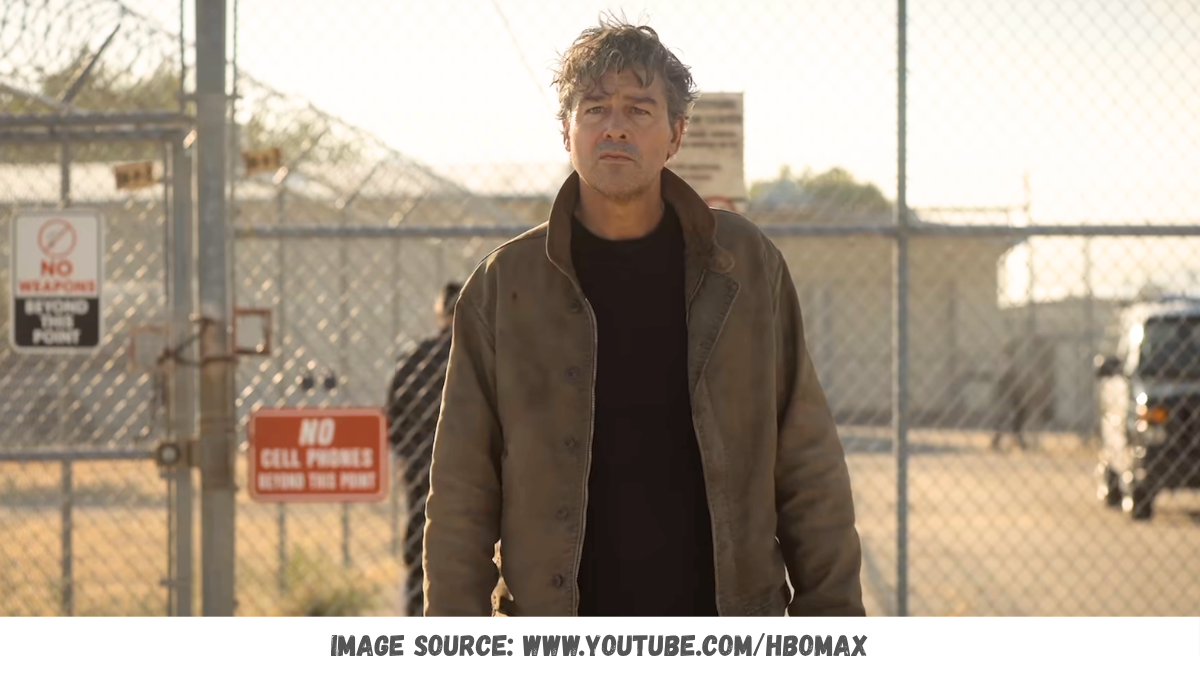
Quick scene-setting for anyone catching up: the whole season has revolved around John Stewart (Aaron Pierre) investigating the murder of his partner, Hal Jordan (Kyle Chandler), whose corpse he discovered back in the premiere.
By the time we reach Lanterns Episode 7, John is leaning on a “Hal-o-gram” — a digital backup of Hal’s consciousness — because the real, fleshy Hal is unfortunately deceased and unavailable for comment.
The episode opens in 1975 with a young Hal (Henry Samiri) getting in trouble for refusing to give up a baseball after nearly pitching a perfect game.
His father Martin, played with aching warmth by Jake B., doesn’t scold him for it — he gently tells him it’s exhausting to hold onto something forever, and that eventually you have to throw the ball.
This quiet post-game conversation between father and son is widely regarded by critics as the emotional high point of the episode. It’s a small moment. It is, as we’ll get to, also the entire thesis statement of Hal Jordan as a character.
The Reveal That Recontextualizes Basically Everything: The Jordan Boys’ Legacy
Here’s the gut-punch Lanterns Episode 7 delivers: Martin Jordan wasn’t just a test pilot who died tragically in a plane crash, which is the beat comics fans already knew. Before he died, Martin left young Hal a key to a family “failsafe,” something passed down from Hal’s own grandfather.
Decades later, when adult Hal finally opens that failsafe, he discovers photographs, cash, and a note in which his father admits he’d been quietly battling depression and had been hiding that pain from his son the whole time.
The Hal-o-gram is the one who ends up breaking this to John, because — and this is the part that stings — the real Hal never could.
The episode reveals that this crushing, generational depression is essentially a family inheritance for the Jordans, one Martin quietly passed down the same way he passed down fearlessness. We learn that both Hal’s father and his grandfather struggled with depression, and that Martin’s death was, devastatingly, a suicide rather than a simple accident.
Sit with that for a second. Lanterns Episode 7 just told you that the most famous “fearless” character in the entire DC pantheon — a man whose entire superpower is literally generated by sheer force of will — comes from three generations of men quietly drowning and calling it bravery. That’s not a retcon. That’s a diagnosis.
Wait, Is This Actually Comic-Accurate? (Yes, Mostly, With a Twist)
Here’s where Lanterns Episode 7 gets genuinely impressive from a lore standpoint instead of just a tearjerker standpoint. Martin Jordan dying in a plane crash while young Hal watched isn’t a TV invention. That piece of Hal’s origin traces directly back to the 1989 comic “Green Lantern: Emerald Dawn,” written by Christopher Priest (credited at the time as Jim Owsley) with art by M.D. Bright.
The show has apparently been quietly seeding this since its premiere, and SlashFilm’s breakdown does an excellent job tracing exactly how faithful — and how altered — that translation ends up being.
The twist “The Jordan Boys’ Legacy” adds is the suicide angle and the multi-generational depression thread, which isn’t lifted wholesale from any single Emerald Dawn panel — it’s an emotional extrapolation, the kind of thing a modern prestige drama does to a decades-old comic panel to make it hit like a freight train.
And for what it’s worth, several outlets have flagged that the show is pulling heavily from co-writer Tom King’s own comics sensibilities, which themselves draw inspiration from Alan Moore and Dave Gibbons’ “Watchmen” — a lineage SlashFilm also traces in detail.
The Sinestro Breadcrumb Nobody’s Talking About Enough
Buried in the failsafe scene is a detail that made comics fans sit bolt upright: IndieWire’s review of the episode points out that Martin originally meant the family “legacy” for his own son to carry — but Hal, in a final act of trust, rigs things so that John is the one who ends up learning what to do about Sinestro.
For anyone who’s read a Green Lantern comic in the last fifty years, that name is not a throwaway. Sinestro is Hal’s mentor-turned-archnemesis, arguably the single most important relationship in the character’s entire mythology, and Lanterns Episode 7 just quietly confirmed he’s baked into the endgame. The show is not playing around.
Also Read: Lanterns Episode 8 Theory: How Hal Jordan Could Have Faked His Own Death
The Psychological Read: Why Hal Jordan Won’t Put the Ball Down
If you want the one-sentence thesis of Lanterns Episode 7, it’s this: Hal Jordan’s legendary stubbornness — the trait that’s made him equal parts hero and insufferable jackass across eight decades of comics — isn’t confidence. It’s armor.
TVInsider’s exclusive breakdown of the episode frames it plainly: the episode is fundamentally about generational trauma, and about the unsettling symmetry between how Martin raised Hal and how the Stewart family raised John — two boys taught, in very different households, that fear is something you swallow rather than name.
Yahoo/IndieWire’s review puts a nice bow on the emotional arc: at the very end of Lanterns Episode 7, Hal goes back for that childhood baseball one more time — except this time it’s not about refusing to let go. It’s about choosing, deliberately, to write a different ending for “the Jordan boys’ legacy” than the one his father and grandfather got stuck with. Martin’s way out, as the episode bluntly puts it, was crashing a plane. Hal’s answer, apparently, is going to be something else entirely — and the finale’s already been teed up to show us what.
But Why Tho?’s recap calls this thread — the shared, generational weight of depression — the strongest and most heartwarming part of the whole hour, which is a genuinely wild sentence to write about a superhero show, but here we are.
A Quick Word on Handling This Responsibly
It’s worth pausing to say: Lanterns Episode 7 is dealing with suicide and depression, and it does so without any cheap “very special episode” energy. Fan reaction has been understandably mixed — some longtime Hal Jordan loyalists are already frustrated that the show has spent its season making him dead, difficult, and now tragically suicidal, per the chatter SlashFilm rounds up.
That’s a fair thing to sit with. If any of what’s discussed here — depression, generational trauma, or suicidal ideation — hits close to home for you personally, please reach out to a trusted person or a professional; you don’t have to carry it alone the way the Jordan boys tried to.
So, Did Lanterns Episode 7 Actually Enrich the Comics, or Just Add Sad Trombone?
Both, honestly, and that’s the trick of it. Lanterns Episode 7 took a fairly thin comic-page tragedy — dad dies in a plane crash, son becomes fearless pilot, roll credits — and reverse-engineered an entire psychological framework underneath it that retroactively makes seventy years of “why does Hal Jordan keep making terrible decisions” click into place.
We’ve Got Back Issues’ review sums up the tonal magic trick well: somehow the episode gets happier the darker it gets, landing on the healthiest version of the Hal-and-John dynamic the show has offered all season, even while delivering regret, grief, and a body count of one perfectly good baseball’s worth of childhood innocence.
MoviesR’s review and Good Men Project’s recap round out the critical consensus: this is the episode where Lanterns Episode 7 stops being a murder mystery wearing a Green Lantern costume and becomes, briefly, a genuinely moving character study — one that Hal Jordan, frankly, has been owed since 1959.
Two episodes left. A finale looming. A Sinestro thread dangling. And a franchise that just proved it understands its most stubborn hero better than most of the comics ever bothered to.



One thought on “Lanterns Episode 7 Just Rewired Hal Jordan’s Entire Comic Book Soul — Here’s the Receipts”