
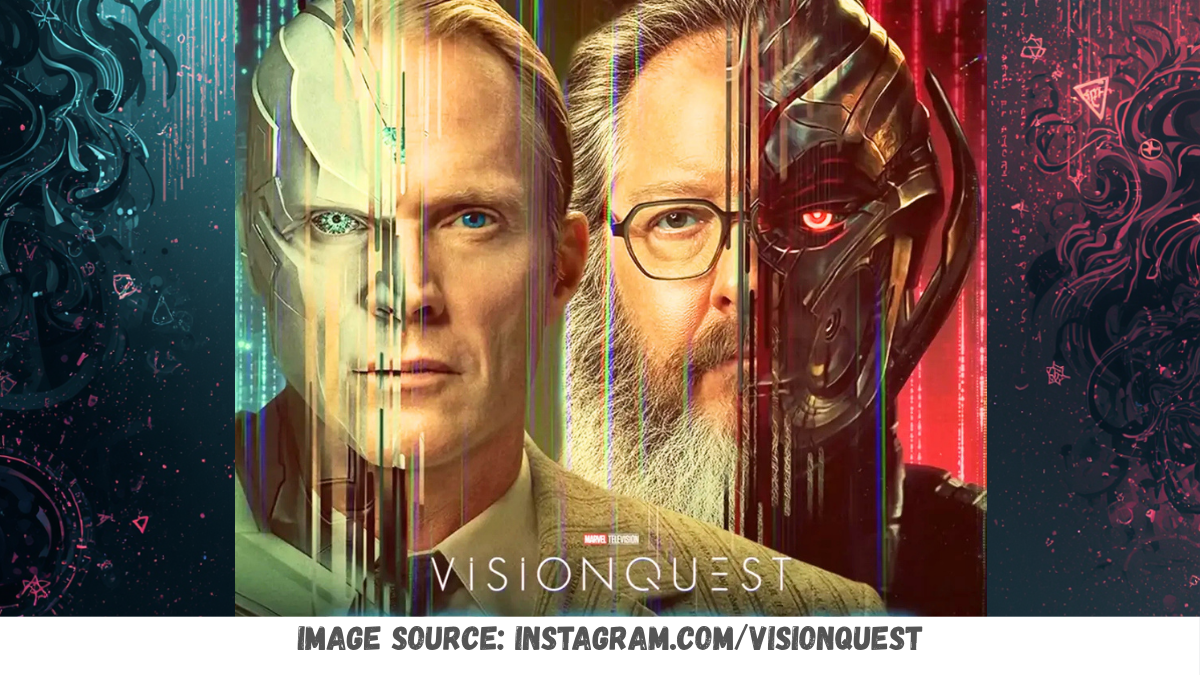
The VisionQuest early reviews have landed, and reading through them feels a lot like watching the show itself: a dozen exhausted Paul Bettanys collapsed on a hotel floor, all talking at once, all slightly disagreeing with each other.
Marvel’s third chapter in the “WandaVision” trilogy — following “WandaVision” and “Agatha All Along” — premieres on Disney+ this Wednesday, October 14, and the critical consensus so far can best be described as: mostly glowing, occasionally scathing, and consistently obsessed with how many James Spaders one show can responsibly contain.
The Love Letters
A sizable chunk of the VisionQuest early reviews read less like criticism and more like fan mail. The Wrap called the show a surprisingly silly affair that still manages to be a worthy conclusion to the WandaVision era, with particular praise for James Spader, Emily Hampshire and Ruaridh Mollica.
The outlet went so far as to suggest that eighteen years into the MCU, this kind of patient, intentional storytelling feels like a lost artform — which is either the nicest or the most backhanded compliment Marvel has received all year.
MovieWeb went even further, arguing that the “WandaVision” trilogy proves Marvel is at its best when it’s not afraid to rewrite the past, and declaring Bettany’s performance as strong as any leading man the studio has ever produced.
Nerdist agreed wholeheartedly, calling the show a roaring success that juggles being weird, funny, and profound while never forgetting it’s supposed to be a show about robots punching each other. Nerdist’s actual stated take: VisionQuest is one of Marvel’s best TV shows, full stop.
Fan site GateCrashers piled on too, praising Spader’s performance opposite Bettany and calling the whole thing — robots and all — one of the most deeply human shows the MCU has produced. And FandomWire handed out a 9/10, describing the series as a powerful capper that finally gives one of Marvel’s most underrated characters his due.
Also Read: Avengers: Doomsday Pre Sales Box Office Data: Marvel’s Multiverse Just Broke the Internet’s Wallet
The “It’s Fine, I Guess” Camp
Not every stop on the VisionQuest early reviews tour was a standing ovation. ComingSoon landed somewhere in the middle, giving the show a 7 out of 10 and praising its contemplative tone, while noting that with so many moving pieces — Vision’s identity crisis, his family drama, assorted looming threats — some of the emotional beats simply don’t get the room they need. Their verdict was essentially: good, bold, a little overstuffed, not quite Marvel’s crowning achievement.
Variety was similarly torn, praising the show’s visual inventiveness — a dozen exhausted, exasperated Bettanys all collapsed on a hotel floor is a sentence that exists now — and singling out Spader’s Ultron as genuinely entertaining. But the review ultimately argued the series buries itself under so much backstory and abstraction that it ends up as confused about expressing emotion as its own android hero.
The Dissenters
Then there’s IndieWire, which showed up to the VisionQuest early reviews party and immediately asked where the exit was. Critic Ben Travers didn’t hold back, describing the show as a tedious “bad-dad drama” dressed up with dense exposition and shiny production design.
His core complaint: an eight-hour season built around waiting for a sentient AI to logically arrive at self-actualization is, in his words, a fairly thin premise to stretch that far.
So yes — somewhere between “lost artform” and “tedious bad-dad drama” is where the critical conversation currently lives, which is honestly a very on-brand place for a show about an android having an identity crisis to end up.
What the Fans Are Saying
Critics weren’t the only ones weighing in early. According to a roundup from The Wrap of first reactions from press screenings, social media reaction has skewed enthusiastic. One viewer called the finale to the trilogy near-perfect, while another ranked it alongside “Loki” and “Wonder Man” as among Marvel’s best television efforts, describing it as strange, beautiful, and emotionally powerful.
A third reviewer summed the whole thing up with three words that have since become the show’s unofficial tagline: trippy, transcendent, and totally terrific.
If social media is any early indicator, the VisionQuest early reviews from everyday viewers skew noticeably warmer than the critical middle ground — proof that nothing unites Marvel fandom quite like watching Paul Bettany have a nine-episode existential crisis in a cardigan.
The Scorecard, Such As It Is
As of this writing, Rotten Tomatoes hadn’t yet tallied its official Tomatometer score — the page was still sitting at zero reviews aggregated ahead of the premiere, even as individual write-ups rolled in across the trades. So consider the current wave of VisionQuest early reviews the appetizer, not the final verdict; the real aggregate score will firm up once the show actually lands on Disney+.
So… Should You Watch It?
Stripped of the back-and-forth, a pattern does emerge across the VisionQuest early reviews: practically everyone agrees Bettany is doing career-best work, that Spader’s Ultron is a scene-stealer worth the price of admission alone, and that the show’s visual approach — doubling and tripling its lead actor, leaning into literalized digital worlds — is ambitious even when it doesn’t fully land.
Where critics split is on whether that ambition coheres into something emotionally resonant or collapses under its own mythology.
In other words: this is a show about a synthetic being trying to figure out what it means to be human, reviewed by humans who can’t quite agree on what it means to feel something while watching television. Somewhere, Vision is nodding along, completely understanding the confusion.
“VisionQuest” premieres Wednesday, October 14, on Disney+.



2 thoughts on “VisionQuest Early Reviews Are In — And Critics Can’t Decide If Marvel’s Robot Had a Great Day or a Very Bad One”