The Meta VR Glasses vs Apple Vision Pro rivalry just got its most interesting chapter yet, and it happened almost by accident. Meta spent all of 2026 telling anyone who’d listen that this was “the year of AI glasses,” quietly building hype for cameras-in-your-frames and voice assistants that live behind your ear.
Then, in the final minutes of Meta Connect 2026, Mark Zuckerberg pulled the rug out and unveiled a genuine, honest-to-goodness headset that looks like a pair of oversized sunglasses, streams IMAX-certified movies, and costs less than a third of what Apple charges for its spatial computer.
If you’ve been waiting for the Meta VR Glasses vs Apple Vision Pro debate to actually mean something — rather than just being “a $3,700 ski-goggle computer vs. a bunch of cardboard headsets” — congratulations, that day has arrived.
Let’s break down what we actually know, what’s still rumor, and why this whole showdown is a lot funnier than either company would like to admit.
Round One: What Meta Actually Announced
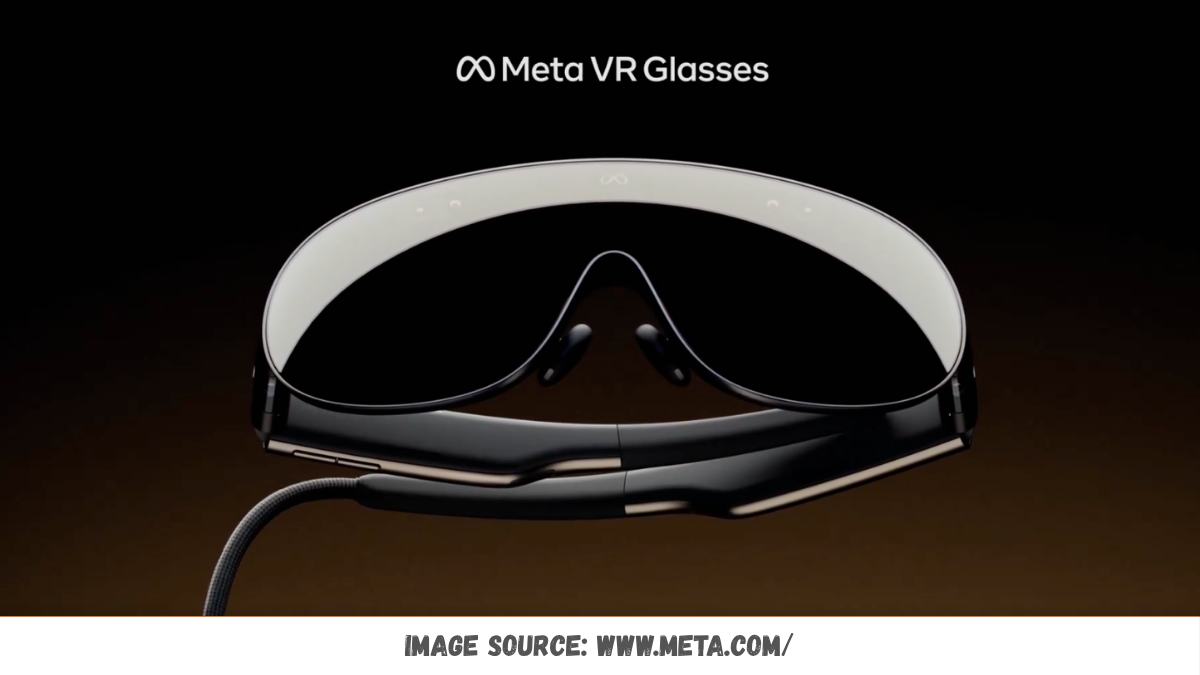
Buried among the third-generation Ray-Ban Metas, a camera-free “audio” pair of glasses, and a hearing-assistance feature, Meta dropped the headline act: Meta VR Glasses, a breakthrough device as wearable as glasses that delivers an IMAX-grade cinema experience and full spatial computing, as Meta’s own newsroom put it.
According to Gadget Review, Meta VR Glasses deliver a 5K Dolby Vision display and 100-gram magnesium frame at $1,299 — which, for context, is lighter than a can of soda strapped to your face, and about a third of the price of Apple’s flagship.
The Main Street Mouse got into the nitty-gritty specs: the Meta VR Glasses feature dual micro-OLED screens running at 120Hz with a resolution of 2,412 x 2,288 per eye, and the headset supports Dolby Vision HDR and is IMAX Enhanced certified, which pairs nicely with Dolby Atmos audio built right in.
In fact, Engadget notes the company says it’s the first IMAX Enhanced certified VR device — a genuinely novel flex in a category better known for motion sickness than cinema cred.
But the trick that makes Meta VR Glasses actually wearable — as opposed to the face-mounted brick genre Meta itself helped popularize with Quest — is where the guts live.
As German outlet Igor’s Lab explains, the computing unit, including the battery, is located in an external compute puck, which is connected to the headset by cable and carried in a trouser pocket, and the whole thing is not controlled using traditional controllers, but by eye and hand tracking. Sound familiar? It should — more on that later.
The comfort-and-convenience story isn’t all sunshine, though. Geeky Gadgets points out the catch: despite their innovative design, the glasses have a three-hour playback limit and require cable management, which may reduce their appeal for extended use. Three hours is a movie and a half.
Ambitious Meta VR Glasses vs Apple Vision Pro movie-marathon plans may need an intermission — and a wall outlet.
On the content side, Meta went shopping in the Magic Kingdom. Per Gadget Review, a Disney Immersive Cinema by ILM app will bring VR Enhanced versions of Avengers: Infinity War and Star Wars: A New Hope to Meta VR Glasses in spring 2027, and Engadget adds that you’ll be able to stream titles through Xbox Cloud Gaming, though Microsoft is imposing new time limits on that service — because apparently even in the metaverse, someone’s still watching the clock.
Notably, this isn’t Meta’s answer to the Quest line at all — it’s a completely separate device, aimed squarely at couch-based cinema and “spatial computing,” not hardcore gaming. Meta VR Glasses launch in spring 2027 at $1,299, according to multiple outlets covering the keynote.
Round Two: What’s Going On With Apple Vision Pro
Now for the other side of the Meta VR Glasses vs Apple Vision Pro ledger — and things have gotten quiet over at Cupertino. Very quiet.
Apple’s current model still runs on the M5 chip it received back in October 2025, and per MacRumors’ roundup, Apple raised the price of the Vision Pro from $3,499 to $3,699 in June 2026 because of the ongoing global memory crisis.
Reviewers haven’t been kind about the value proposition since: the $3,699 Vision Pro is prohibitively expensive for many consumers, and reviews have made it clear that it is a device that does not easily fit into an existing workflow for most people — some users have even regretted purchasing the headset. Ouch.
And at over 1.3 pounds, the Vision Pro is heavy and fatigue can set in quickly, even with the improved Dual Knit Band. That’s roughly six times heavier than the 100-gram frame Meta is boasting about — a genuinely lopsided stat in the Meta VR Glasses vs Apple Vision Pro weight class comparison.
Sales haven’t exactly rescued the narrative either. Next Reality reports analysts estimated Apple sold roughly 390,000 Vision Pro units across all of 2024, its launch year, and the holiday quarter that followed the M5 update still produced an estimated 45,000 shipments, according to reports. For comparison, that’s roughly what a mid-tier smartphone maker might sell before lunch.
The rumor mill has been especially unkind. In April 2026, AppleInsider covered a MacRumors report suggesting Apple Vision Pro hardware as it stands in April 2026 may truly be dead, with Apple likely having given up on the platform due to a lack of consumer interest after the M5 update.
AppleInsider itself pushed back a little, arguing Apple is now in a holding pattern as it waits for modern technology to catch up with its demands for a true second-generation model, or its smart glasses concept.
Perhaps the most brutal detail comes via MacObserver, which flatly states: Apple has not announced a successor chip, a new headset revision or a price change for Vision Pro since the M5 update.
Meanwhile Stuff traces the “next real Vision Pro” rumors back to a shelved internal project once known as Project Alaska, noting industry chatter that Apple’s true next move is a leaked roadmap suggesting no Vision releases in 2026, with the glasses following in 2027 alongside a revised ‘Vision Air’ version of the original headset — though even that’s looking shaky. And analyst Ming-Chi Kuo, never one to sugarcoat things, apparently does not believe Apple is working on a new headset at all.
So in the current Meta VR Glasses vs Apple Vision Pro standings, Apple’s contender is essentially the reigning champ standing very still in the corner, occasionally getting a firmware update, while a new, much lighter challenger warms up in the wings.
Round Three: The Actual Head-to-Head
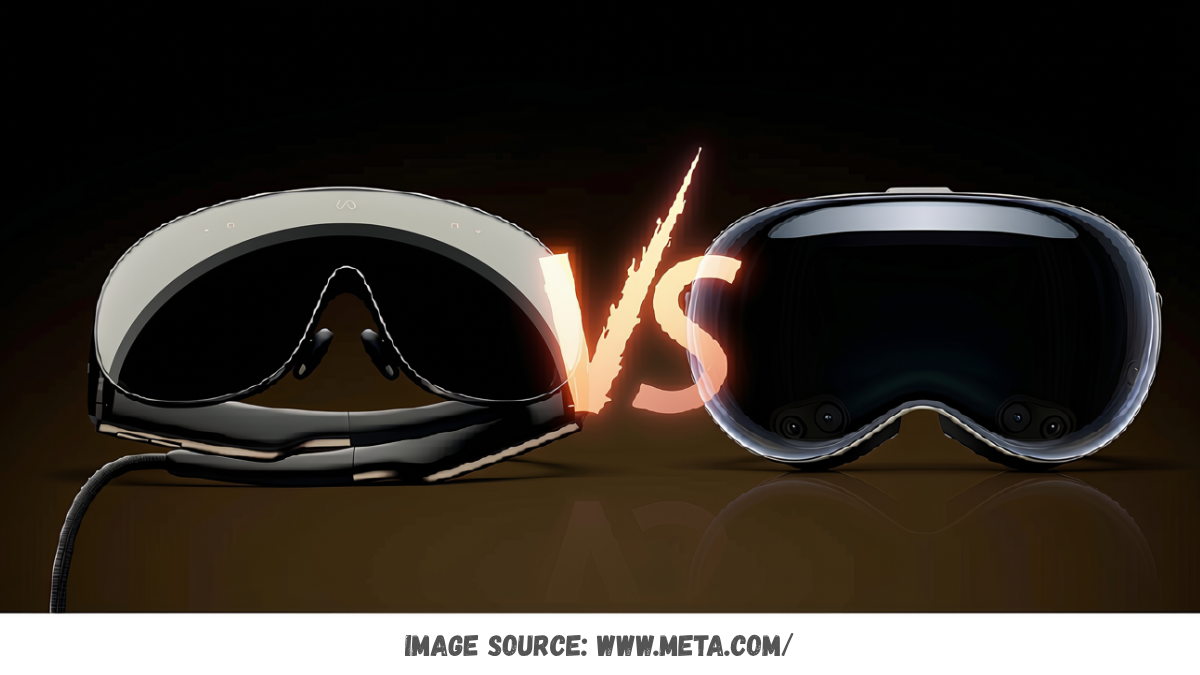
Here’s where the Meta VR Glasses vs Apple Vision Pro comparison gets genuinely entertaining, because the two devices are converging on remarkably similar ideas from wildly different starting price points.
Price: Meta VR Glasses at $1,299 vs. Apple Vision Pro at $3,699. Igor’s Lab summed up the gap bluntly, noting Meta’s pricing positions the device well below the Apple Vision Pro, which costs around 4,000 euros. You could buy a Meta VR Glasses set, a Ray-Ban Meta Gen 3, and still have cash left for popcorn — forever — for the price of one Vision Pro.
Weight: 100 grams vs. over 1.3 pounds (about 590 grams). This isn’t a close fight. Meta essentially outsourced the “heavy” part of the experience to a pocket puck, while Apple bolted the battery pack onto the back of your head and called it a design choice.
Display bragging rights: Both are chasing cinema-grade visuals — Meta with 5K Dolby Vision and IMAX Enhanced certification, Apple with its own famously sharp micro-OLED panels — but only one of them can currently claim the “first IMAX Enhanced VR device” title, and it’s not the one from Cupertino.
Content strategy: Meta signed Disney and ILM for exclusive immersive cuts of Marvel and Star Wars films. Apple has its own Apple Immersive originals and NBA partnerships, but nothing at the scale of raiding the House of Mouse’s back catalog.
Control scheme: This is the part that should make Apple fans chuckle — Meta’s new headset ditches controllers entirely in favor of eye and hand tracking, the exact interaction model Apple pioneered with Vision Pro back in 2024. In the Meta VR Glasses vs Apple Vision Pro interface war, imitation really is the sincerest form of flattery.
Release timing: Meta VR Glasses are slated for spring 2027. Apple’s actual next-generation headset has, as of this writing, no confirmed date, no confirmed chip, and possibly no confirmed pulse.
Also Read: Meta VR Glasses Just Landed, and Your Face Will Never Be the Same
So, Who Wins the Meta VR Glasses vs Apple Vision Pro Showdown?
It depends entirely on what you’re optimizing for. If you want the most technically ambitious, most expensive, most “look what a computer can do” spatial computer on the planet, Apple Vision Pro is still sitting there, M5 chip humming, waiting patiently (whether by design or by drift) for a sequel nobody can confirm is coming.
If you want something you can actually wear for a two-hour movie without your neck filing a workplace grievance, Meta VR Glasses currently look like the more sensible bet — assuming that three-hour battery cap and cable-management puck don’t drive you up the wall first.
What’s undeniable is that the Meta VR Glasses vs Apple Vision Pro conversation has flipped almost entirely in the last twelve months.
A year ago, this was David vs. Goliath, except Goliath had a giant screen strapped to his face and David was still figuring out if VR headsets needed to be heavy to be taken seriously. Now Goliath’s team has reportedly been quietly reassigned, and David just landed a partnership with Disney and ILM.
Grab your popcorn — spring 2027 is going to be must-see viewing, in more ways than one.